

By using our website, you agree to the use of cookies as described in our Cookie Policy
How to Remove Pin Bones from Salmon (And Why They’re Totally Normal)
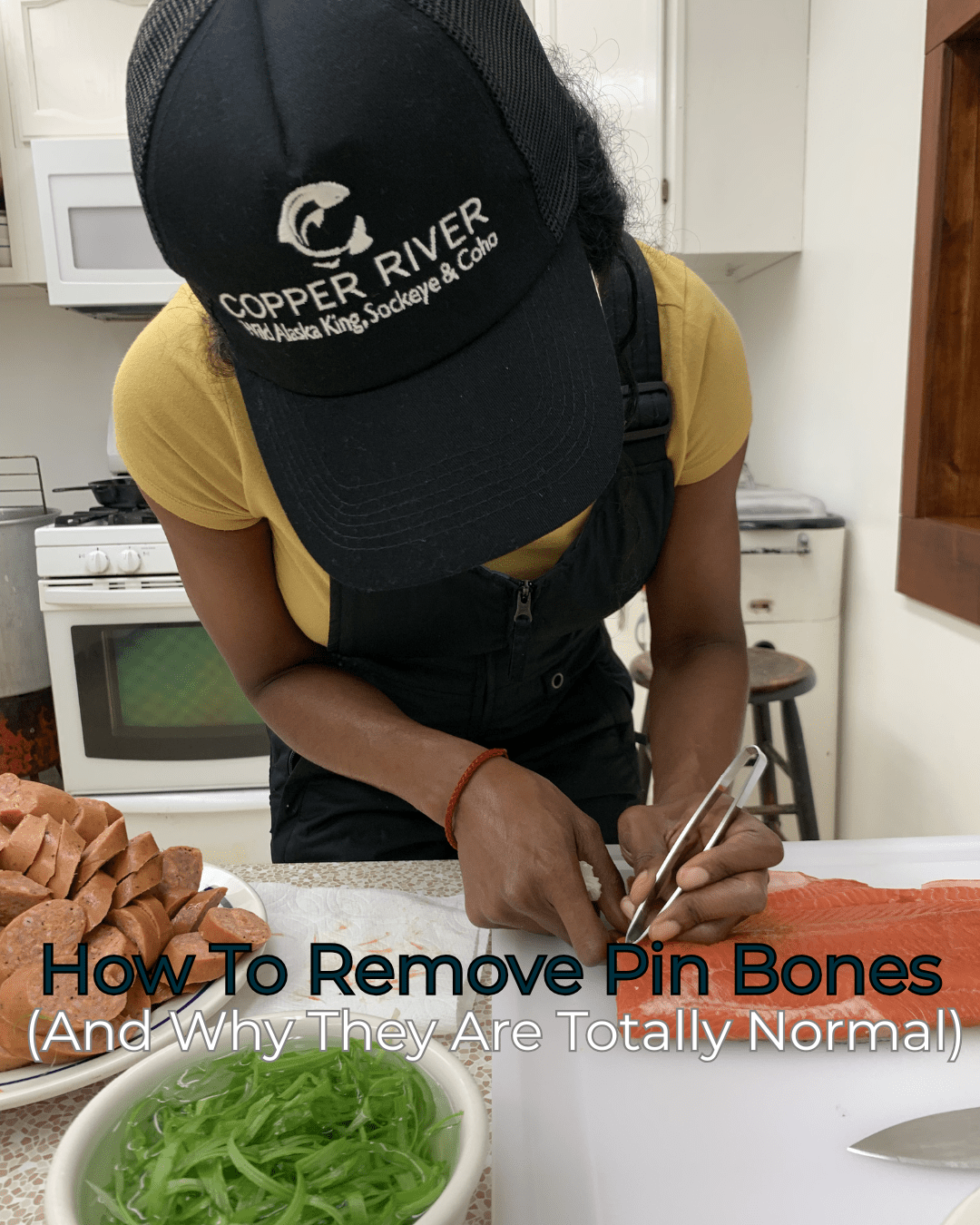
If you’ve ever brought home a fillet of Copper River Salmon and noticed a row of tiny bones, you’re not alone.
Pin bones are one of the most common surprises for home cooks — and one of the easiest things to fix once you know how. This guide will walk you through what they are, why they exist, and exactly how to remove them so your salmon is ready for the pan, grill, or oven.
What Are Pin Bones?
Pin bones are small, thin, flexible bones that run in a single line down the center of the fillet. They’re part of the fish’s natural anatomy and help support muscle structure while the fish is alive.
Even with careful filleting, these bones sometimes remain — especially in high-quality wild salmon where the goal is to preserve as much of the fillet as possible.
Good news: They’re not dangerous, and removing them only takes a couple of minutes.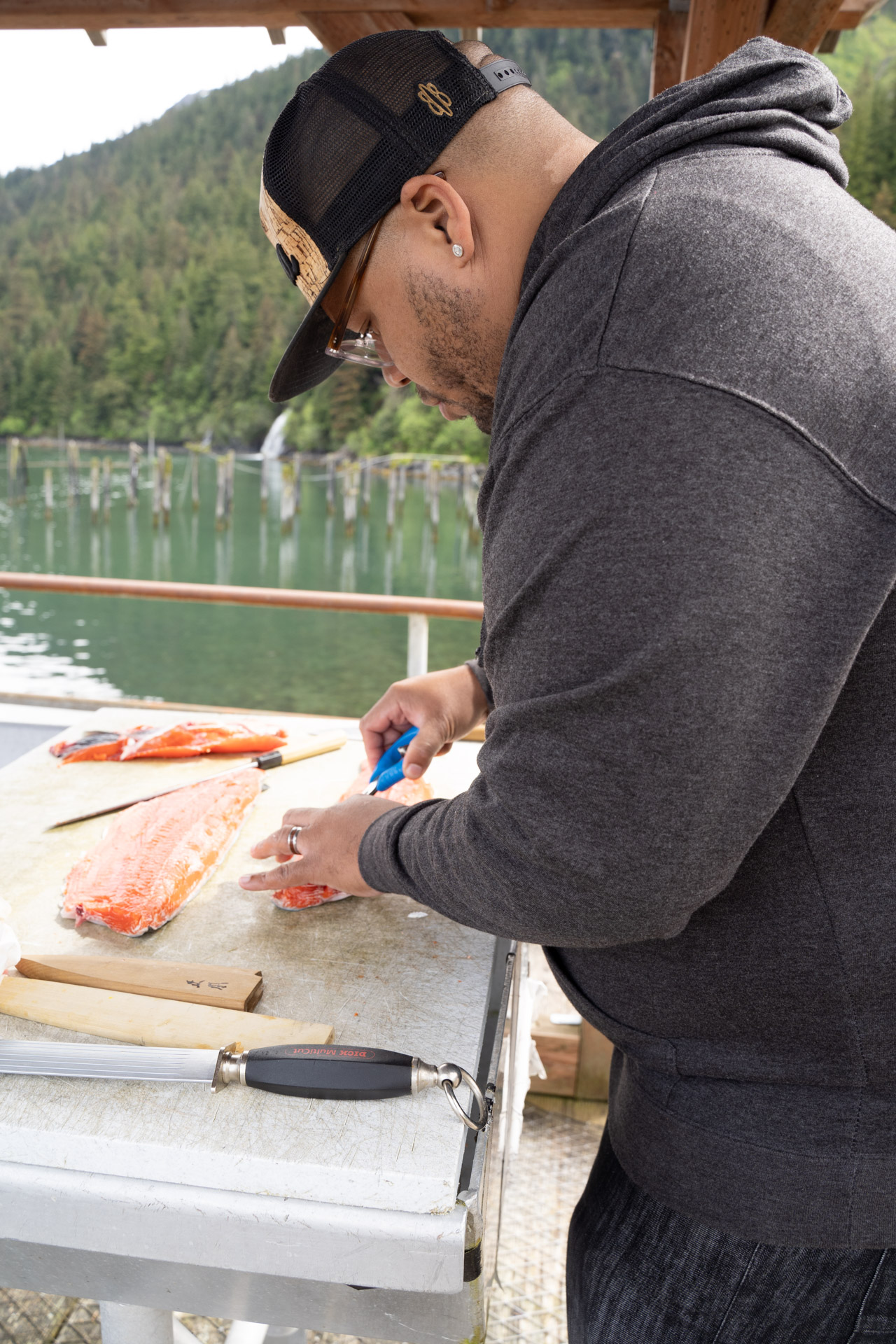
First Know This: Your Fish Monger Can Do It For You
If you’re buying salmon from a seafood counter or local fish market, don’t hesitate to ask: “Could you please pull the pin bones?”
Most fishmongers have the tools and experience to do this quickly, and it’s a totally normal request. It’s a great option if you’re short on time or preparing fish for a crowd.
Tools You'll Need at Home:
You don’t need anything fancy
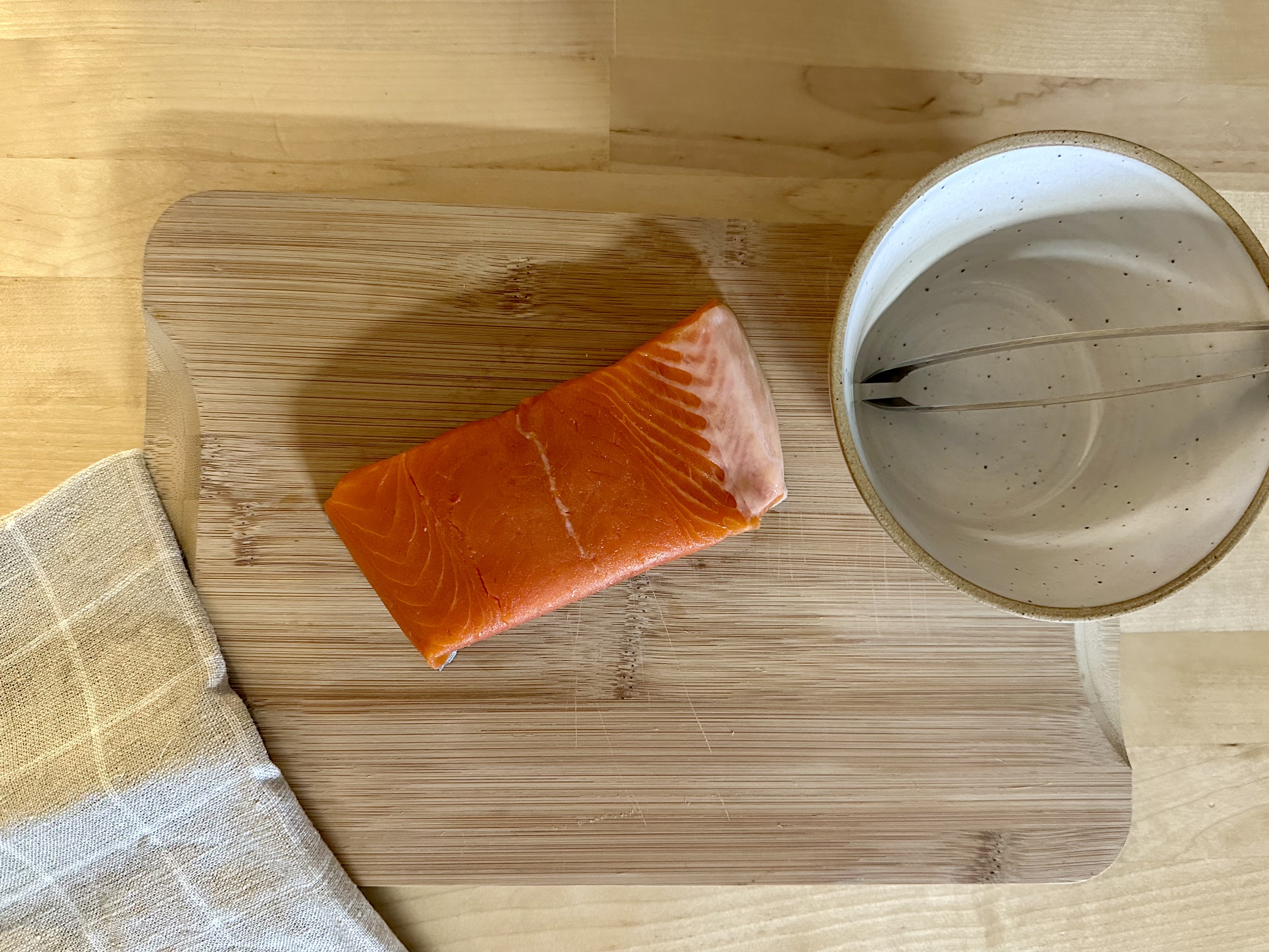
- Fish tweezers or clean needle-nose pliers
- A small bowl or towel for discarded bones
- Good lighting
- Your fingertips (yes, really!)
Step-By-Step How To Remove Pin Bones
1. Lay the Fillet Skin-Side Down
Place your salmon on a cutting board with the thicker end facing you. This makes it easier to locate the bone line.
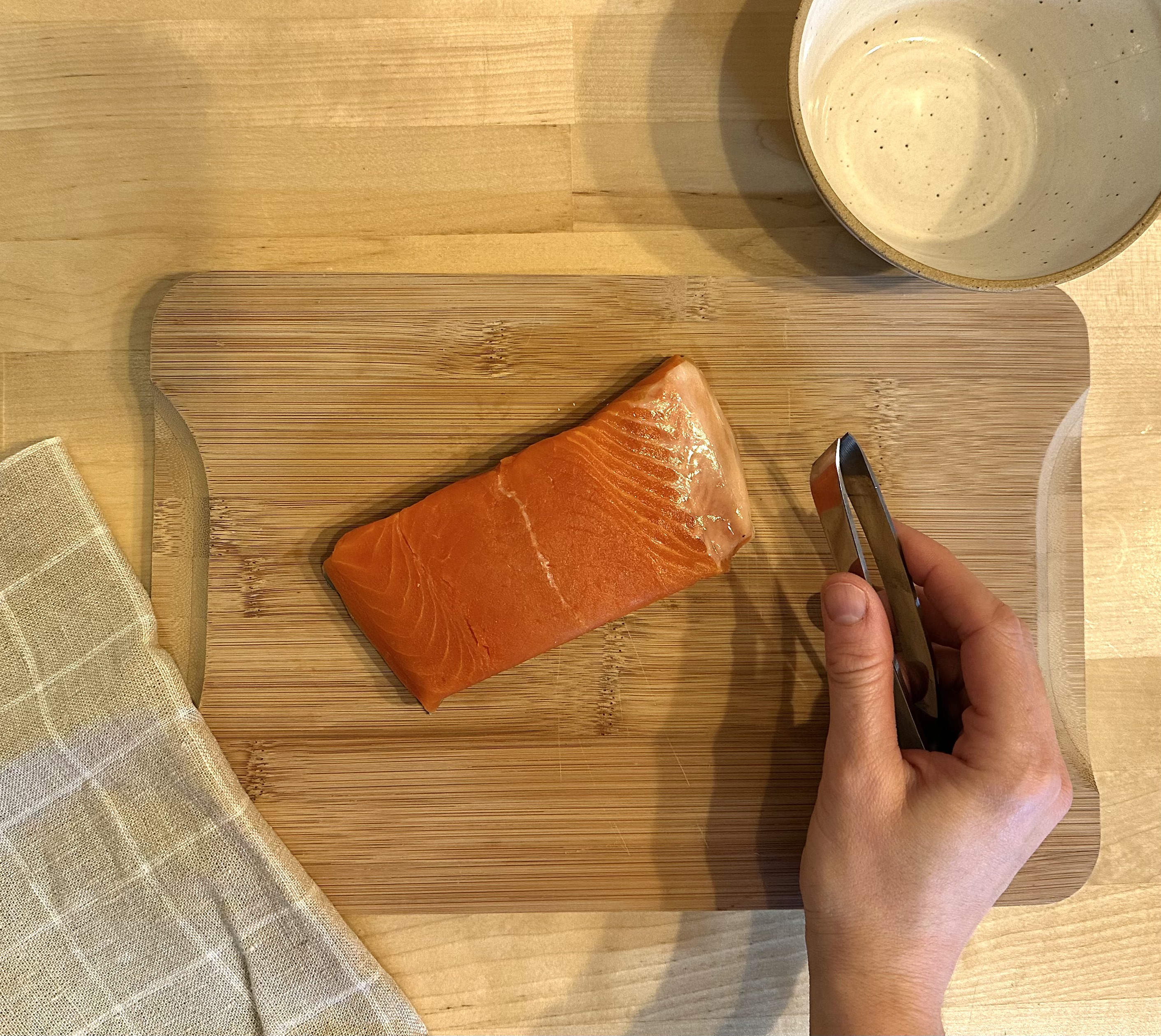
2. Find the Bone Row
Run your fingertips gently across the surface of the fillet from head end to tail.
You’ll feel small bumps — that’s the line of pin bones.
Tip: Slightly bending the fillet helps the bones protrude and become easier to grab.
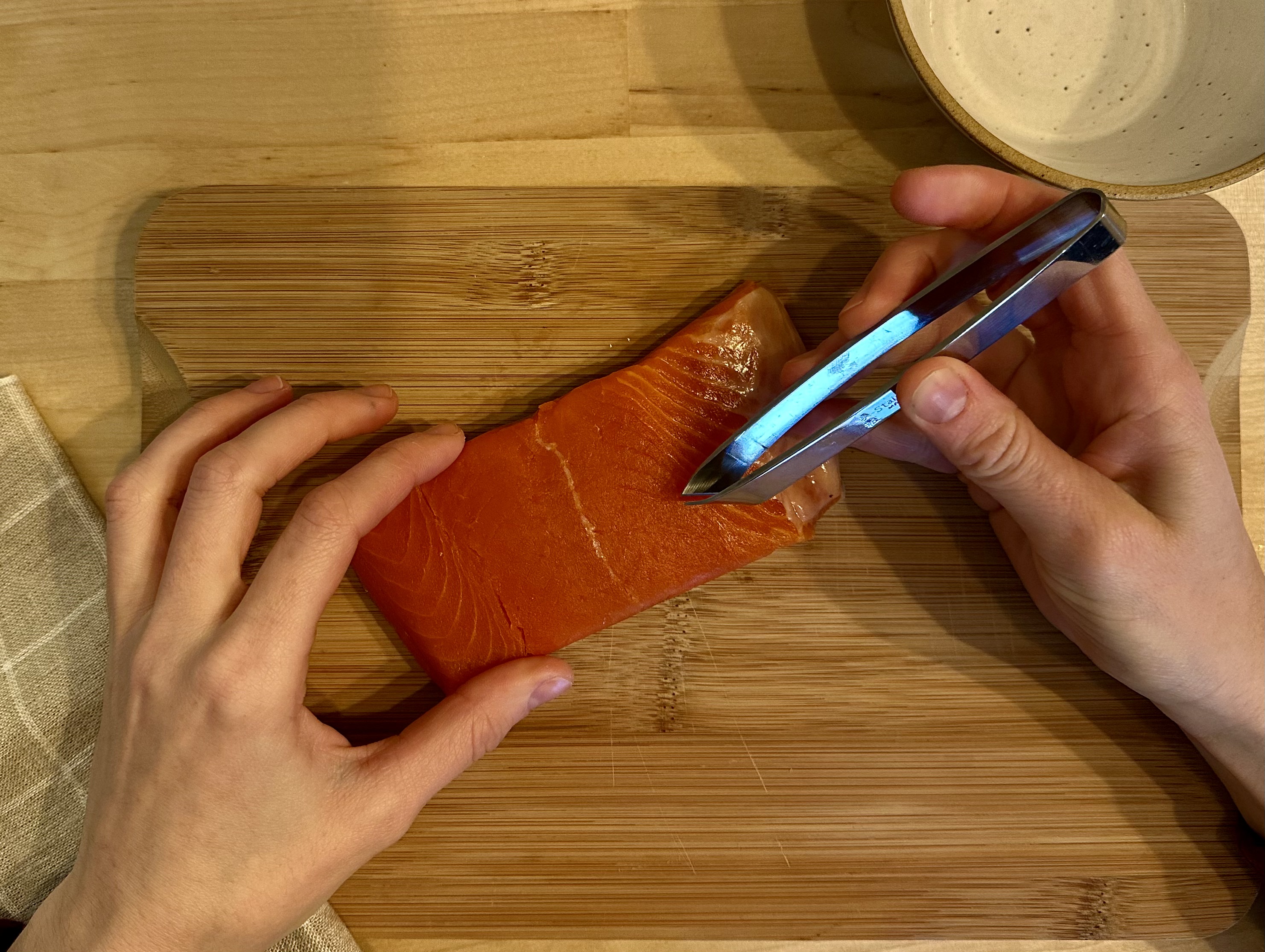
3. Grab Each Bone Firmly
Using tweezers or pliers, grip the tip of the bone.
4. Pull at a Slight Angle
Pull slowly and steadily in the same direction the bone is pointing (usually toward the head end).
This helps prevent tearing the flesh.
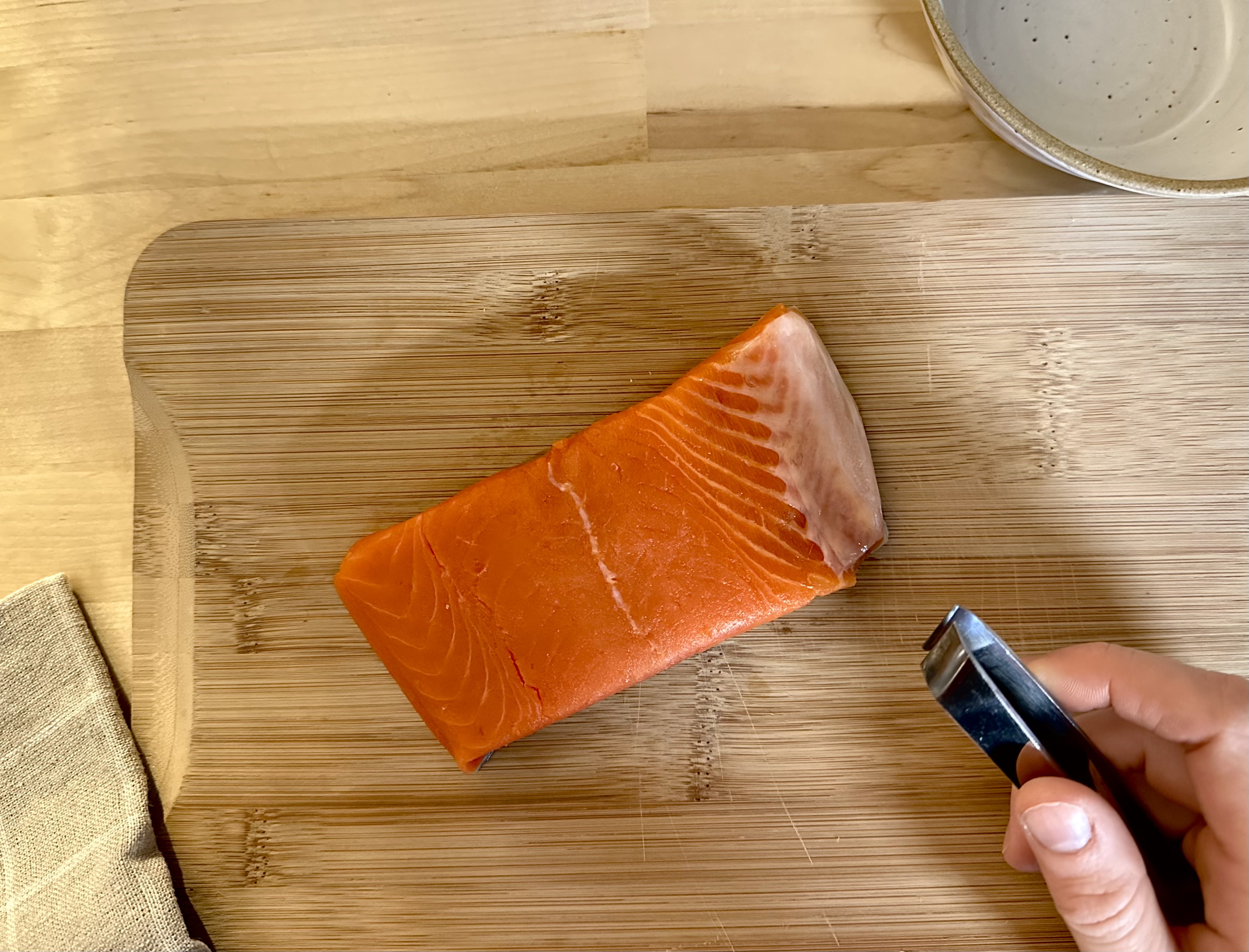
5. Repeat Along the Line
Work your way down the fillet until you no longer feel bumps when you run your fingers across.
6. Double-Check
Lightly sweep your fingertips over the fillet again — this tactile check is the best way to ensure you didn’t miss any.
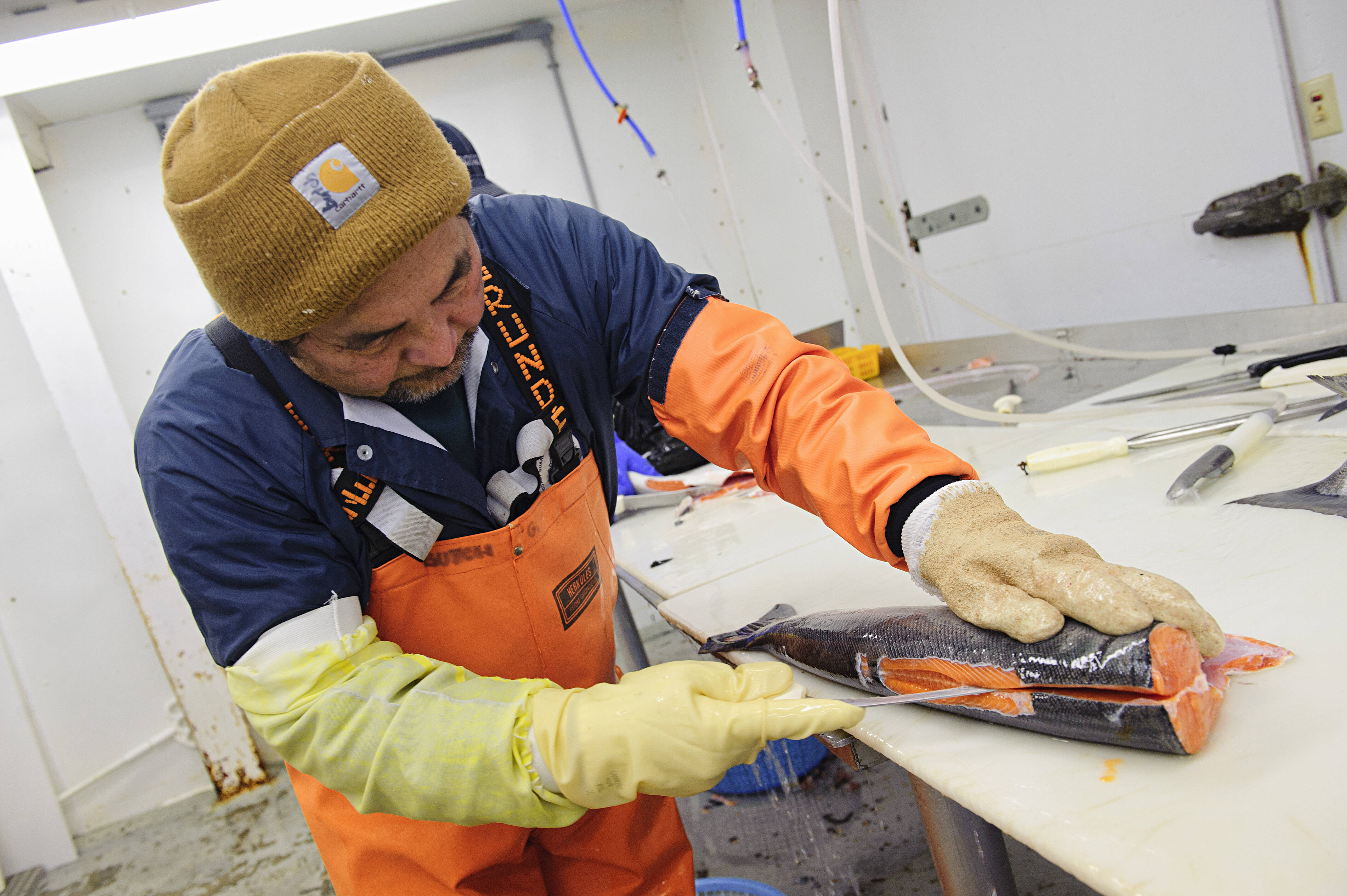
Pro Tips From The Kitchen
- Do it while the fish is cold: The flesh is firmer and bones come out cleaner.
- Don’t rush: A gentle pull keeps the fillet looking beautiful.
- Save the bones: They can go into a seafood stock if you’re making one.
- Check smaller portions: If you cut the fillet into pieces first, re-check each portion.
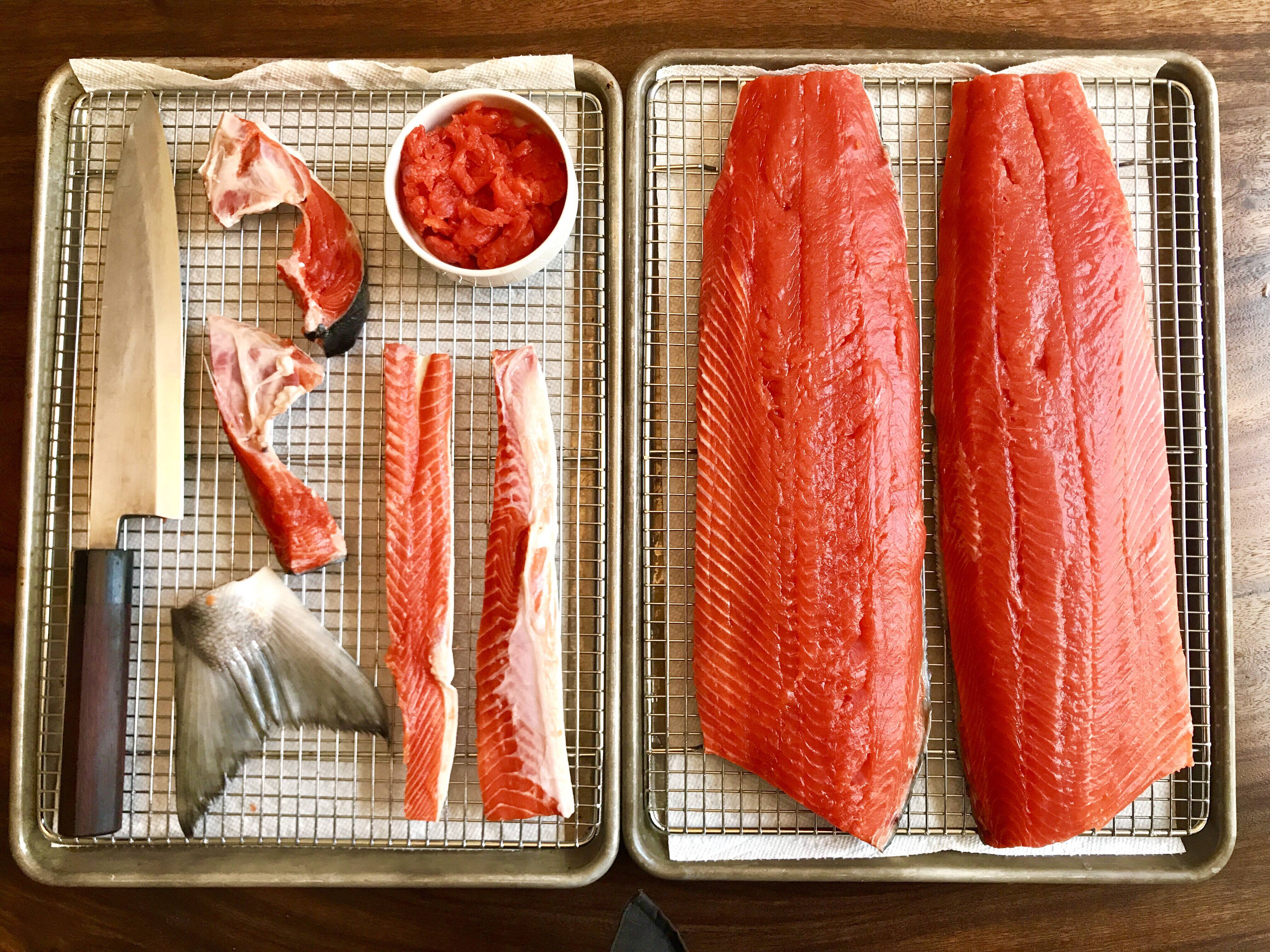
Why You'll Still Sometimes See Them
With wild salmon, especially premium seasonal runs, processors often prioritize preserving the integrity and size of the fillet. That means pin bones may be left in rather than making additional cuts that remove valuable meat.
It’s a small trade-off for exceptional texture and flavor — and now you know exactly how to handle it.
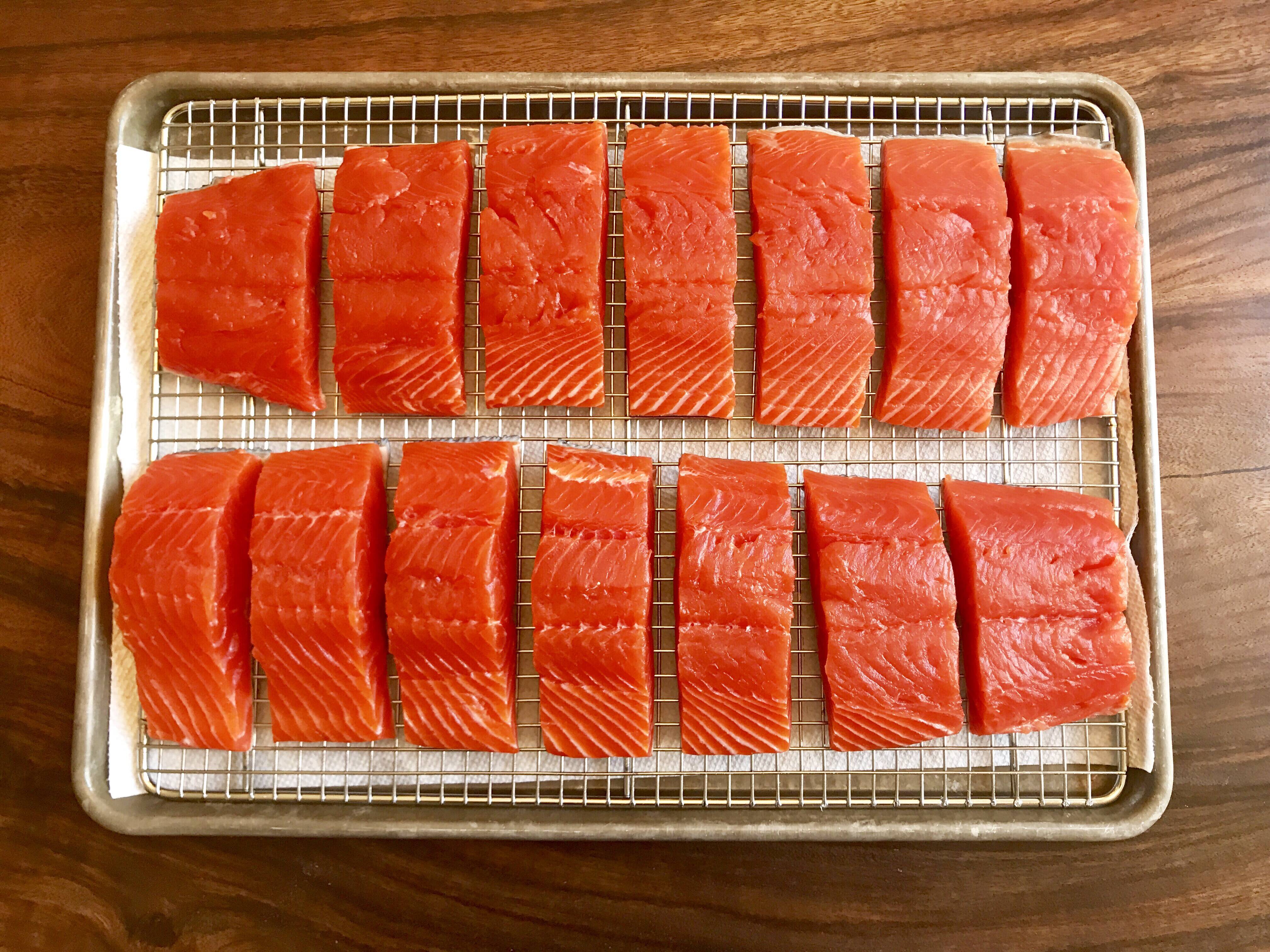
FAQ: Pin Bones in Salmon
Are pin bones safe to eat?
Yes. They’re not harmful, but they can be unpleasant to bite into, which is why most people prefer to remove them before cooking.
Do all salmon have pin bones?
Yes — all salmon naturally have them. Some fillets have already been “pin-boned,” but occasionally a few may remain.
Will cooking dissolve the bones?
No. Unlike very small bones in canned fish, pin bones in fresh salmon will not dissolve during cooking.
What’s the easiest tool to use?
Fish tweezers are ideal, but clean needle-nose pliers work just as well.
Can I ask for boneless salmon at the store?
Absolutely. Most seafood counters will remove pin bones for you — just ask your fishmonger.
Not at all. With premium wild fish like Copper River Salmon, leaving the fillet as intact as possible helps preserve texture and yield.
From Our 40 Ways To Enjoy Copper River Salmon Series: Tip #9: Make No Bones About It
‹ Back
Recent Posts
-
Meet Chef Damian Puente
September 29, 2026
-
Meet Chef Bryant Kryck
September 9, 2026
-
Meet Chef Derek Simcik
August 20, 2026
-
Copper River King Salmon Season Is Here
May 29, 2026
-